
Have you ever seen “DNI” in a social media bio, text message, or Discord profile and wondered what it means? Internet slang can feel like a language of its own, especially when people shorten common phrases into three letters.
If you’ve come across DNI online, don’t worry. Its meaning is fairly simple once you know the context.
Quick Answer:
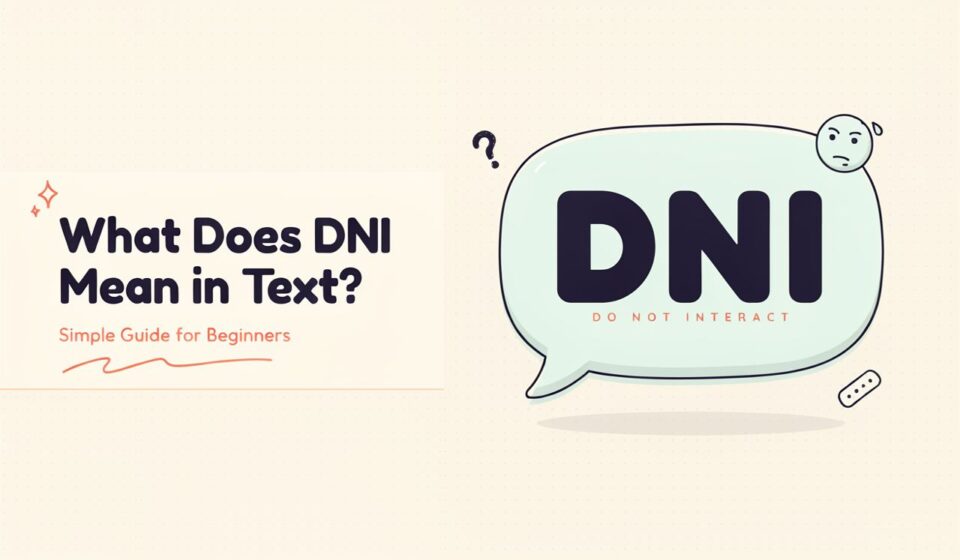
DNI usually means “Do Not Interact.” People use it online to tell certain users not to message, comment, follow, reply to, or otherwise engage with them or their content.
For example, someone might write “Trolls DNI 🚫” in their bio. That means they don’t want trolls interacting with them.
🧠 What Does DNI Mean in Text?
DNI stands for “Do Not Interact.”
It’s mainly used online as a boundary or warning. A person may add DNI to their profile, post, or message when they want to discourage interaction from specific people or groups.
The people included in a DNI statement can vary. Someone might say “Minors DNI,” “Homophobes DNI,” “Rude people DNI,” or simply “DNI if you’re here to argue.”
The exact meaning depends on what comes after DNI.
Example:
“If you’re going to be disrespectful, DNI.”
In this case, the person is clearly asking disrespectful users not to engage with them. In short: DNI = Do Not Interact = Please don’t engage with me or my content.
Also read: What Does WYS Mean in Text 🔥📲 Easy Explanation (2026)
Where Is DNI Commonly Used?
You’ll mostly encounter DNI meaning in text in online communities where people can easily communicate with strangers.
Popular platforms:
- 🎵 TikTok
- 💬 Discord
- 🐦 X (formerly Twitter)
- 🎮 Gaming communities
- 🌐 Personal blogs and online profiles
You may see DNI in a username, profile description, post caption, community rule, or pinned message.
For instance, an Instagram bio might say:
“Artists only | trolls DNI 🚫”
The person is making their interaction preferences clear before others contact them.
Tone & Style:
DNI usually sounds direct and firm. It isn’t normally playful slang.
Depending on the wording, it can come across as:
- ✔️ Clear
- ✔️ Protective
- ✔️ Serious
- ✔️ Boundary-focused
- ❌ Sometimes blunt
- ❌ Occasionally confrontational
That’s why context matters. A simple “DNI” can sound much stronger than “Please don’t interact if you’re here to cause problems.”
Examples of DNI in Conversation
Seeing real examples makes the meaning much easier to understand.
1. Social media bio
“Minors DNI 🚫”
Meaning: The account owner doesn’t want people under the specified age interacting with them.
2. Dealing with trolls
“Trolls DNI.”
Meaning: People who intentionally provoke others should stay away.
3. Personal boundary
“Ex-friends DNI.”
Meaning: Former friends are being asked not to contact or interact with the person.
4. Community rule
“People who post hate speech, DNI.”
Meaning: The community doesn’t welcome users who engage in hateful behavior.
5. Comment section
“If you’re only here to argue, DNI.”
Meaning: The creator doesn’t want argumentative engagement.
6. Discord profile
“Spam accounts DNI.”
Meaning: The user doesn’t want spam accounts contacting them.
The key idea remains the same: DNI tells a particular group of people not to engage.
When to Use and When Not to Use DNI
DNI works best in casual digital spaces. However, it isn’t appropriate for every situation.
✅ When to Use DNI
You might use DNI when you want to:
- Set a clear online boundary
- Discourage unwanted messages
- Filter interactions on social media
- Keep a community respectful
- Avoid arguments or harassment
- Tell certain audiences not to engage
- Make profile rules easy to understand
For example:
“No spam accounts, DNI.”
That’s short, clear, and easy for online users to understand.
When Not to Use DNI
Avoid relying on DNI in formal or professional communication.
It may sound too informal in:
- Business emails
- Job applications
- Workplace conversations
- Customer service messages
- Academic communication
- Professional networking
Instead of writing:
“DNI.”
you could say:
“Please refrain from contacting me about this matter.”
The second version communicates the same general boundary but sounds more appropriate in a professional setting.
🔄 Other Meanings of DNI in Text
In internet slang, DNI most commonly means “Do Not Interact.” However, abbreviations can have different meanings in specialized settings.
For example, DNI can refer to completely different things outside casual texting, including names, organizations, technical terms, or medical terminology. That’s why you shouldn’t automatically assume every occurrence of DNI means “Do Not Interact.”
Look at the surrounding words. If you see:
“Trolls DNI 🚫”
the meaning is almost certainly Do Not Interact. If DNI appears in a professional document, news article, or specialized discussion, it may have another definition.
Similar Slang Words or Alternatives
Several expressions can communicate an idea similar to DNI, although they aren’t exact replacements.
| Term | Meaning | Typical Use |
|---|---|---|
| DNI | Do Not Interact | Online boundaries |
| DND | Do Not Disturb | Avoid interruptions |
| No DMs | No direct messages | Limiting private messages |
| Block | Prevent someone from contacting you | Stronger boundary |
| Ignore | Don’t respond | Casual avoidance |
| Leave me alone | Stop contacting me | Direct personal request |
For example, DND usually means you don’t want interruptions, while DNI specifically tells certain people not to interact.
Why People Use DNI in Texting & Social Media
There are several reasons why DNI has become common in online communication.
1. Setting Boundaries
Online platforms can expose people to strangers, unwanted opinions, and uncomfortable conversations. DNI gives users a quick way to establish a boundary. Instead of explaining the same rule repeatedly, they can put it directly in their bio.
2. Protecting Mental Health
Some people use DNI to reduce stressful interactions. Avoiding specific types of conversations can help them maintain a more comfortable online environment. It can also discourage arguments, harassment, or repeated unwanted messages.
3. Controlling Audience
Creators and community members sometimes want to make it clear who their content is intended for. A DNI notice can communicate those expectations before someone starts interacting.
4. Building Safe Communities
DNI can also appear in fandoms, support communities, gaming groups, and private online spaces. Moderators or users may use it to discourage behavior that could make the community uncomfortable or unsafe.
5. Fast Communication
Three letters are much quicker than writing “Please do not interact with me.” That efficiency is one reason abbreviations thrive on social media. People can communicate a complete idea in just a few characters.
Is DNI Rude or Respectful?
Whether DNI sounds rude depends heavily on how it’s presented.
Respectful:
“Please DNI if you’re here to spread hate.”
The word “please” softens the request while keeping the boundary clear.
Neutral:
“Haters DNI.”
This is straightforward. It isn’t necessarily rude, but it doesn’t try to soften the message either.
Harsh:
“If you disagree with me, DNI. Don’t waste my time.”
This version can sound dismissive or aggressive.
So, DNI itself isn’t automatically rude. The surrounding language, situation, and relationship between the people involved all influence the tone.
DNI Meaning Discord Explained
On Discord, DNI is especially common because users interact through servers, private messages, profiles, and communities.
You might see something like:
“DNI if you spam DMs.”
or:
“Toxic users DNI.”
A server may also have rules explaining who should participate and what behavior isn’t welcome. On a personal Discord profile, DNI can function like a short social boundary. It tells visitors what kinds of interactions the user doesn’t want. Remember, though, DNI isn’t a Discord-specific abbreviation. Its meaning stays the same across most social platforms.
DNI vs BYI: What’s the Difference?
DNI and BYI can both appear in social media bios, but they serve different purposes.
| Term | Full Meaning | Purpose |
|---|---|---|
| DNI | Do Not Interact | Tells certain people not to engage |
| BYI | Before You Interact | Gives information or warnings before someone engages |
Think of it this way:
DNI = “Don’t interact.”
BYI = “Read this before interacting.”
A DNI statement is generally a direct boundary. BYI is more like a heads-up that provides context about the person, account, or community.
FAQs About What Does DNI Mean in Text
What does DNI mean in texting?
DNI usually means “Do Not Interact.” It’s used to tell certain people not to message, comment, follow, reply, or engage with someone online.
What does DNI mean on social media?
On social media, DNI usually indicates that certain users or groups shouldn’t interact with the account or its content.
Is DNI rude?
Not necessarily. DNI is direct rather than automatically rude. The tone depends on the wording surrounding it.
What does DNI mean on Discord?
On Discord, DNI generally means “Do Not Interact.” Users may put it in their profiles or communities to establish boundaries.
Is DNI the same as DND?
No. DNI means “Do Not Interact,” while DND usually means “Do Not Disturb.” DNI focuses on interaction, whereas DND generally means someone doesn’t want interruptions.
What should I do if someone says DNI?
If you see a DNI notice that applies to you, the safest response is simple: respect the person’s boundary and don’t interact.
Final Thoughts
So, what does DNI mean in text? In most social media and online conversations, it means “Do Not Interact.”
You’ll commonly see it in bios, Discord profiles, community rules, captions, and posts. People use DNI to establish boundaries, manage their audience, avoid unwanted conversations, and create more comfortable online spaces.
The important thing is to pay attention to the context. DNI is usually straightforward, but the tone can range from polite to extremely blunt depending on how someone writes it.
Once you know the meaning, seeing “DNI 🚫” online won’t be confusing anymore. It’s simply a short way of saying, “Please don’t engage.”


[…] What Does DNI Mean in Text 🤔: Simple Guide for Beginners (2026) […]